
Heating Curve
A plot of temperature versus heat, showing the amount of heat energy a substance has absorbed with increasing temperature is called heating curve.
To draw heating curve of a substance, it is taken in a closed container in order to isolate it from its surroundings and then it is observed that how it changes as it is influenced by the heat.

When heated, the substance absorbs the energy and its temperature increases. When the temperature reaches to melting point(M.P.), it changes from solid state to liquid state. At this point temperature remains constant, which is represented by a plateau(AB). The heat absorbed during phase conversion S → L is called Latent Heat of fusion Lf .
After phase conversion S → L, when further heat is supplied, the temperature increases, and when it reaches to boiling point (B.P.) again a plateau(CD) is reached and the substance changes from liquid state to gaseous state. At boiling point, the temperature does not change due to Latent Heat of vaporization Lv .
From the above heating curve we note that :-
- Lv > Lf
- QB – QA = heat required for melting = mLf
- QD – QC = heat required of boiling or vaporization = mLv
- Order of slope :- γ > α > β ⇒ tanγ > tanα > tanβ
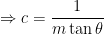
- Slope of heating curve,
- From point (5), specific heat(c) ∝ 1/(slope of heating curve), ⇒
- Heat capacity(H.C.) :- Again from point (5),


![\displaystyle H.C.=mc=\frac{1}{Slope}\Rightarrow {{\left[ H.C. \right]}_{liquid}}>{{\left[ H.C. \right]}_{solid}}>{{\left[ H.C. \right]}_{vapour}}](https://s0.wp.com/latex.php?latex=%5Cdisplaystyle+H.C.%3Dmc%3D%5Cfrac%7B1%7D%7BSlope%7D%5CRightarrow+%7B%7B%5Cleft%5B+H.C.+%5Cright%5D%7D_%7Bliquid%7D%7D%3E%7B%7B%5Cleft%5B+H.C.+%5Cright%5D%7D_%7Bsolid%7D%7D%3E%7B%7B%5Cleft%5B+H.C.+%5Cright%5D%7D_%7Bvapour%7D%7D&bg=ffffff&fg=000&s=0&c=20201002 "Heating Curve 5")
Example 1.
Two bodies I and II of equal masses are heated uniformly under identical conditions. Initially, both are in the solid state, and the rate of heat supply is the same for both. The variation of temperature with time for the two bodies is shown graphically.

(a) What are the melting points of the two substances?
(b) Find the ratio of their specific heats in the solid state.
(c) Find the ratio of their latent heats of fusion.
(d) Find the ratio of their specific heats in the liquid state.
Solution :
(a) The melting points of liquids I and II are 40∘C and 60∘C, respectively.
(b) As
specific heat (c) ∝ 1/(slope of heating curve)
Hence ratio of their specific heats in the solid state :

(c) We note that the temperature of I remains constant for 3 units of time (7 sec – 4 sec = 3 sec) and that of II for 4 units of time (6 sec – 2 sec = 4 sec). Now if R be the rate of supply of heat, then for body I :


Similarly for body II :

Hence ratio of their latent heats of fusion :

(d) Again using,
specific heat (c) ∝ 1/(slope of heating curve)
We get ratio of their specific heats in the liquid state :
